

Looking After Houseplants in Wintertime

At this time of year, our houseplants are especially precious. Our homes are sealed tight against the cold of the outdoors. Only our plants breathe life into the stale air.

It’s also this time of year that many of them are most delicate. They’re probably not growing quick as they would in spring or summer, so it can be easy to forget to check on them. It might also seem that since they’re safe and warm inside, they should be treated like they’re not experiencing seasons at all. That’s flat-out wrong. Plants need a different kind of care in wintertime.

Pumping the central heat all winter makes for unnaturally dry air that’s a strain on most plants. Your cacti and succulents might be okay with it, but keep a close eye on everything else—especially if you’ve got anything that hails from the rainforest or jungle. For these guys, you’ll need to either park them near a humidifier or make a habit of misting them with a spray bottle. Bathrooms are usually a great home for plants that crave humidity. You’ll want to consider your individual bathroom before you move any plants in there, though. Since they’re usually one of the smallest rooms in the house, bathrooms might be extra cold, extra dry, or fluctuate dramatically between both when the heat kicks on and off. If that’s the case, you might want to stick to the misting and keep your plants in a more consistently warm room.

Pinpoint the drafts in your house and move your plants out of these danger zones. This doesn’t just apply to the chill creeping in from outside—keep your plants away from blasting heat vents, too. As for the cold drafts, only the most tightly sealed window is a good place for a plant to overwinter. If your windows are breezy, move your plants to a new spot and find them a different source of light. You may need to purchase artificial plant lights to get the job done. Don’t overdo it though—plants don’t need summertime sunlight hours during winter, and some plants don’t like direct light at all. Research your plants’ preferences before you get them settled into a permanent lighting situation.

Just because your indoor plants are safe from the cold doesn’t mean that they don’t need their wintertime rest—even the biggest cacti in the hottest deserts have a dormant season. Let your plants take their winter sabbatical by ceasing efforts to encourage growth. Don’t feed and fertilize plants during winter, and reduce your regular watering schedule dramatically. Most plants will do well if they are watered only when the top inch or two of soil is completely dry. They need a lot less when they’re not growing, and too much water can cause root rot or other disease. To be extra kind to your plants, use room temperature water so you don’t shock their roots with the frigid stuff that first comes out of the tap. By changing the way you feed and water your plants, you let them experience a winter of sorts. This helps them to complete their natural cycles so that in springtime they’ll grow faster than ever or possibly even flower.

Don’t repot during winter unless it’s urgent. Since your plants aren’t growing, it’ll be a lot tougher for them to take root in new soil. You should only repot if the plant is at risk in its current home due to disease, pests, or some other issue with the soil.
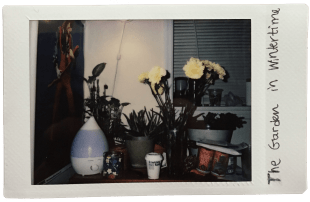
51216228_548342269003589_3689981561349865472_nWhen spring arrives and the danger of frost has gone, move them back to the windows.They’ll stretch out in the sunlight and grow again. Until then, nestle them among your pencils, in your bookshelf, on your kitchen table—wherever they need to be to stay warm and get a taste of indirect light. They might not look as photogenic spread helter-skelter, but let their green splendor all throughout the house be a constant reminder of the life all around you. Such is the nature of the wintertime garden.

Winter Walking

This week is about to get sit-on-your-hands-at-every-stoplight cold. These are the days that drive us all inside. When you’ve got someplace to be, you shuffle straight from the house to the car and curse the cold as the engine shudders to life.50612236_2001423719976125_1038608364453494784_n

The winters here are rarely so brutal that we actually need to take shelter. But if you spend most of your days indoors, you only have to think about dressing warmly enough to make it to and from the vehicle. When you’re thinking that way, the extra layers are nothing but uncomfortable and unnecessary. Nobody wants to wear four layers to a party and slowly strip in the hosts’ doorway. Instead, we shiver for a brief, terrible minute as we walk to and from the car.

The trick to enjoying the outdoors during winter is to forget for a moment the convenience of the thermostat and remember an older but equally valuable invention: warm clothing. When you’ve got that cooped-up-cabin-fever coming on, don’t let the cold keep you from a walk in the park or a ride on a bicycle. All you’ve got to do is stop thinking, “Will this keep me warm enough?” and start thinking, “how many layers can I fit under my biggest coat?” Once you’ve transformed into a waddling bundle, step outside.

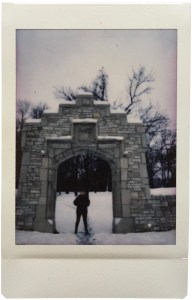
There’s a different sort of pleasure in a freezing cold walk. It isn’t leisurely; it’s invigorating. Walk long enough and you’ll start to warm up. Notice how many birds are still living out in the cold, hopping from tree to tree. Notice the construction crew in their coveralls who work in this weather all day long. There is still life out here. Soon you might be peeling off layers, even sweating; all the while your cheeks are ice cold. On days like these, you’ll have the parks, the botanical garden, or the zoo almost all to yourself. Cars will pass you by, their drivers probably wondering aloud who the hell would be out in this weather. Strive to be the one who will be every time.

When your winter walk comes to an end and you step into the house you were shivering in an hour ago, a house which now feels far too hot, you’ll feel you have conquered the cold. On the paper towel dispensers at Shaw Nature Reserve, someone has pasted a Kierkegaard quote:

“Above all, do not lose your desire to walk. Everyday, I walk myself into a state of well- being & walk away from every illness. I have walked myself into my best thoughts, and I know of no thought so burdensome that one cannot walk away from it. But by sitting still, & the more one sits still, the closer one comes to feeling ill. Thus if one just keeps on walking, everything will be all right.”

Snowstorm in a City Somewhat Accustomed

First there are the whispers. The weatherman says snow, but we are doubtful. We’ve all got a boy-who-cried-wolf story about a St. Louis forecast. We poo-poo and pish-posh and ho-hum. Then we go about our week. Only the kids take it seriously because they know unless they believe with all their might, they won’t get their snow day.

Then comes the preparation. The shrugging-it-off gives way to MoDot trucks and landlords salting the sidewalks. Now begins the rush to the grocery store. Everybody’s got to get their soup, their snowmelt, their sleds and their scrapers. At a Kingshighway gas station on Friday afternoon, a man stood in line at the checkout, clutching one windshield scraper in each hand. “Lucky man,” said the cashier. “You got the last two!” The man in line behind him let out a gasp—he’d been waiting to ask the employee if they had any in stock. The first man took pity on him and gifted him one of his two new scrapers—“Well, I’d be evil not to!” he said.

The city-wide anticipation rises to a panic as even the most determined of the naysayers give in and run out on last-minute missions. So begins the fervor. Dad’s at Dierbergs calling mom to see if they’ve got flour in the pantry. The kids are hollering. Target sells out of sleds. Highways pack tight with people fleeing for the homestead. On the unplowed neighborhood backroads, little cars are pushed uphill by friendly neighbors. The bartenders and baristas pray that the owner will have the goodwill and decency to call up and set them free before their car gets buried. Some are luckier than others. Then the telltale blue banner goes up on the bottom of the screen on the local news: here they come, the closings. The students are giddy.

And here in the midst of the fever-pitch-frenzy comes the reveal: it has come. They were dead-on, right on the money. The snow is here, and here in huge mounds…it’s coming down and it’s stopping for nobody. The highway is jam-packed, come to a stop. For every living creature in town, this storm is the highlight of the day.

In St. Louis, we all know what to do when a big snow hits. We aren’t unaccustomed to snowstorms. We aren’t afraid. The panic that overtakes the city doesn’t come from fear—it comes from an insatiable urge to launch into those old snow day rituals we partake in every time. God forbid you get caught without cookie dough or hot chocolate! You won’t have another day like this for God-knows-how-long. So after you’ve made it through the treacherous traffic, the holiday commences. You shut the door behind you and split a six-pack with your significant other. You suit up to go sledding or shovel neighbors’ driveways. You swap horror stories about the traffic with everyone you see. When the whole city comes to a halt, anybody who’s able will gladly take their customary sabbatical. It’s tradition!

Whatever you do, don’t miss the most precious moment of these snows. Late at night, when everyone else is asleep, crack open your door and take a long look. The soft white glow lights the night sky almost lavender. And listen. The downy drifts soak up the noise of the city. Even the sounds you can hear seem distant, soft. There is the sense that nothing could go wrong on this night. All is peaceful. All is well. A summer night holds a buzzing energy, the heat of potential and possibility. But a snowy night holds you in its palm and whispers, “rest.” So close the door behind you, and, turning in for a snug winter sleep, surrender.

The Season of Stars

“Cold is the night when the stars shine bright.” So one saying goes, and though the stars themselves aren’t really shining brighter in the cold, there’s some truth to the old adage. Cold nights sometimes make for clearer skies since cool air can’t hold as much moisture as hot air can. And, in wintertime, the stars that we are facing are brighter-burning than the ones we face in summer. Thanks to these radiant winter stars, you might even be able to make out traces of some of the beautiful winter constellations, even in the center of the light-polluted city. Indeed, winter is the season for stargazing.

51027017_338874040045851_5090226000327868416_nOrion visits our night skies this time of year and makes sure you can’t miss him. He sports some of the brightest stars in the winter sky. Orion is a hunter, lunging forward with his sword drawn for a fight. His right knee is Rigel, and his left knee, which is not quite as bright, is called Saiph. At his right shoulder is the star Bellatrix. His left shoulder is the conspicuous Betelgeuse, a red giant.

Another bright red giant, Aldebaran, is the fiery red eye of the bull, Taurus. Within the Taurus constellation is the Pleiades star cluster, whose 7 brightest stars are the muses that Orion pursues forever across the night sky. And Sirius the dog star is the brightest star in the night sky, Orion’s loyal pup who will stick around and be visible all winter long.

Orion is probably the constellation you’ll have the best luck seeing from the city center, but there are other winter constellations around that you’ll have better and better luck seeing the farther out you can get. Gemini is a winter constellation, and its two brightest stars, Castor and Pollux, are visible from the city. Auriga, Cassiopeia, Perseus, Pegasus, and Andromeda (in order from bright to dim) are also major winter constellations that you may have better luck viewing a little further out. Leo is more of a spring constellation, but late at night, it too will begin to become visible as winter wears on.

There are plenty of bright stars that you can see from within the light-polluted city, but it’s hard to identify which is which when you can’t see the dimmer stars near them for reference. The best way to fix this issue is to go somewhere more remote. But if you can’t get away, there are astronomy apps out there that will tell you which stars you’re looking at when you point your phone at the sky. Once you have identified one or two stars, you’ll be better able to guess at the surrounding ones. Physical star charts are an even better tool, especially if you want to start to learn to identify the stars on your own. You should also get away from nearby lights as much as you can—it’s not just the glow of the city as a whole that affects your eyes—the lights immediately surrounding you also affect your ability to see stars since they change the way your eyes adjust to the darkness. If you have lights on even in your own backyard, turn them off. The pros will even read their star charts by a red light because the less energetic, longer wavelength has a much less significant effect on your eyes.

If you can get away and want to make a night of it, Broemmelsiek Park Astronomy Site in St. Charles is the perfect spot. It’s open to stargazers 24/7 and since it’s dedicated to looking at the stars, the light pollution is purposefully limited. The Saint Louis Astronomical Society (SLAS) is another great resource. This group holds frequent events that are free and open to the public. There’s no need to sign up ahead of time, either. You just show up and get ready to learn—educated members of the group are there to answer questions, and they’ll let you use their telescopes. They’ve even donated some telescopes to the St. Louis Public Library system, so you can check one out and use it on your own.

It just so happens that we in St. Louis are at the same latitude of Ancient Greece. So as you look up at the mysterious constellations, don’t let it slip past you that you’re seeing those stories play out across the night sky exactly as the Greeks did when they first told the tales of the stars. And even if you don’t study the stars in great detail, don’t forget when you step outside and start to shiver: the clear skies of a cold night are perfect for turning your eyes upward.

The Days Grow Longer

With the holiday season coming to a close, it seems the dead cold of winter is ready to settle over us. We return from New Year celebrations or long holiday vacations and grit our teeth. We prepare ourselves for the months of cold that still lie ahead, we grunt and we hunch and we bundle.

But watch closely in this heart of winter, and you will see that it is a time of good change. With the winter solstice behind us, the daylight lingers just a little longer each day. Every night, darkness falls later than it did the night before. At first it comes later by just a matter of seconds, then minutes. By the end of January, the days are growing by two minute intervals. From now until the summer solstice, the daylight will increase exponentially.

When the new year comes along, it makes us feel like something in the world has reset. There is a sense of fresh opportunity. We make resolutions and try to better ourselves. Remember as you step into this new year that sudden leaps of change are much less common in nature than unhurried marches, sometimes hardly detectable. As you make an effort to better yourself, keep pace with these slowly lengthening days. They are steadily growing.

The Last Gift of Christmas

A Christmas tree has adorned the White House practically every year in American history. As far as we know, there have been just four years that the White House didn’t have a tree, and Teddy Roosevelt is responsible for three out of the four. They say that the nature-loving president saw deforestation happening in the name of the tradition and refused to get behind it.

These days our Christmas trees come from farms, not from wild forests. From time to time, somebody who’s thinking along the same lines as T.R. will say that they like to reuse an artificial tree  instead of cutting down and killing live trees year after year. But all things considered, nowadays a live Christmas tree is more environmentally friendly than an artificial one by a long shot. An artificial tree is usually used for about 10 years. Once it’s discarded, its plastic branches will shine unscathed in a landfill for a hundreds of years to come. Your live tree will decompose naturally, and it’s doing good for the earth long before you’re cutting it down. Trees take 7-10 years to grow to marketable size, and they spend their lives putting out oxygen into our atmosphere and soaking up carbon through the soil that surrounds them. They improve the landscape for wildlife, too–your Christmas tree might’ve been home to birds who spent their summer at the farm. The demand for live Christmas trees increases the number of trees planted. Every year in the United States, 100 million Christmas tree seedlings are planted and 40 million are cut in winter. 

It’s hard work to grow marketable trees successfully. Farmers spend a lot of time carefully trimming the trees to get that ideal cone shape. In spring and summer, common pests like wasps and worms have to be removed. On a pesticide-free farm, this means picking off bugs and fungi by hand. The changing climate is making farmers’ job even harder. Dry conditions are bad for tree growth because evergreens need a lot of water to thrive, and some farms’ crops have suffered. Pea Ridge Forest, located in Hermann, Missouri, is a popular destination for St. Louis families who want to choose and cut their tree on-site at a farm. At Pea Ridge, the dry summers and mild winters of recent years have made it increasingly difficult to grow successful crops of Christmas trees. This year, the farm bolstered their own crop with trees shipped from Michigan and the Carolinas.

In colder climates like those, it’s much easier to grow fir trees. Growing firs here in Missouri takes lots of extra water, sometimes even the installation of irrigation systems. It’s much easier to grow pine trees here, so the Scotch pine in particular is a popular choice for Missouri farmers and their customers. Pine trees are the most resistant to warmth and dryness, which also means they’ll hold their needles the longest after they’re cut. Our homes are way too hot and dry for an evergreen’s liking, so it’s good to take this into consideration when you’re thinking about what kind of tree you want and how long you want to have it displayed. Firs will hold their needles second-longest after the pines, and the spruces come in last.

Inevitably every year comes the twinge of sadness when you must take down the Christmas decorations, and the tree along with them. Most of our decorations are packed away safely for the next year. It’s only our live Christmas trees to which we must say a permanent goodbye. But while the ornaments and ceramic Santa Claus sleep packed away and useless til next winter, the Christmas tree makes itself useful in a new way. It can be turned to mulch for next year’s garden. It can be burned as firewood. If you want to provide winter shelter for birds and rabbits, you can lay it down in your backyard and leave the strings of popcorn for them to eat. You can also donate your tree to be recycled by one of the city parks. 

Even if you don’t make practical use of your tree, the last Christmas gift you give each year is to return a real tree to the earth from which you cut it. No matter where the tree ends up, it will rot away and give back to the earth the gift of the nutrients it borrowed while it was living. And this period of decomposing and giving back will last long past its fleeting moment of glory in your bright front window.

Unpredictable December

December is a month that reminds us that we can’t anticipate everything. This year it began with snow, ice, and a bitter cold that’s faded now into rain, fog, and a mild chill more reminiscent of fall than winter. Comforting as it is to enjoy the warmer days or stay cozied up inside, everybody’s bound to be caught by surprise sometime this winter. Early this month, a spit of unforecasted sleet caused a midday exodus from the Missouri Botanical Garden. A woman ran for her car with her child so stiffly bundled in a puffy pink coat that she bounced helplessly on her mother’s shoulders. A middle-aged man hunched headfirst into the wind. He plowed on forward, slow and steady, looking not surprised by the weather, but personally offended. A group of brightly-dressed third-graders marched in a long, trailing line behind their steadfast teacher. She walked with calm posture and her head held high, a quiet “don’t-you-dare” as she led them back towards the school nearby. The children, bouncing and laughing, seemed hardly to notice the spitting sleet.

Winters in St. Louis are like this: unpredictable. The average amount of snowfall in December is 4.4 inches, but that number doesn’t reflect the wide range of each year on record. It isn’t unusual to get less than an inch of snow in December, nor is it unusual to get close to eight inches. And the average low temperature doesn’t usually get too cold until January, but anyone who’s lived here awhile knows that there’s plenty chance of a plummet at any moment. Missouri’s climate is notorious for being all over the place, and so many things besides the cold can make for a fiercer winter: the bitter wind racing between the buildings downtown and creaking the old, tired trees; sharp little sleet pellets biting at the face; the dry winter air cracking the fingers and palms of a people so used to sauna-like summers. And yet, a week out, many of us are checking the forecast and crossing our fingers for a cold, snowy Christmas Eve.

Maybe that’s why the old, familiar traditions of the holidays feel so comforting and warm. In the face of the cold outside and the uncertainty of an upcoming new year, we treasure this holiday for which our oldest friends and closest family members will gather together and do those things which we have always done. That’s why a warm Christmas Day in St. Louis always feels unsavory even to those who hate the cold the most—even if it’s just for a day each year, we want to feel that there is a supernatural warmth that comes from sharing gifts and customs with the people we care about in spite of the harshness of the world outside. As for whether we’ll get a cold and snowy Christmas this year, there’s not much to do but wait and see.

Holiday Guests

Each year, those plants that are too loved to be lost to winter are tenderly collected from the backyard or balcony and brought indoors. They congregate in our window sills or among the mugs left out on the kitchen table, and on cold, grey days we welcome their company. Come December we invite a couple of holiday guests to our growing indoor winter garden.

The bright red poinsettia is one of these visitors, and it’s a strange one to have received this honor. In the United States, the poinsettia is so closely associated with Christmas and wintertime that its own natural habitat seems to us like a mismatch. Poinsettias come from Mexico and need to be treated like the tropical plants they are. They prefer a hot, wet environment, so they should be kept away from drafty windows and misted regularly. It’s a lot of trouble to make the bracts turn red like that, and that task is usually left to the experts. But anyone who’s got patience and a willingness to fail can have a crack at getting this year’s plants to redden again next Christmas.

It’s a complicated process: After the season’s over, the leaves will fall. When that happens, cut the stems down to just a few inches high and keep the plant pretty dry and out of the sun. In early May, freshen up the compost and put the plant in a new pot. After repotting, water thoroughly and regularly whenever the soil starts to feel dry. When new shoots appear, choose the four or five strongest and remove the rest so they don’t have to compete for space. Now the poinsettias will grow, but they’ll only turn red again if you carefully manipulate the light. The last week of September is game time. The plant must be kept in complete darkness for 14 hours each day. To make that happen, you have to cover the poinsettia with a dark plastic bag from early evening til morning every day for eight weeks. Then treat it like normal again. If all goes well, your poinsettias will be red again in time for Christmas.

Since the early 1900s, one family has dominated the poinsettia industry by mastering the plant’s complicated cultivation. The Ecke family developed a way to grow a bushier, more attractive plant and kept their technique top secret for for decades. In the 1980s, a graduate student named  John Dole cracked the code and published his findings. They finally had some competition after that, but to this day they rule the poinsettia industry. The Eckes are also responsible for the popularization of the poinsettia as a Christmas plant in the United States. They began referring to it as “the Christmas flower” and went to great lengths to send them to popular magazines and television shows to be featured during the holidays. Paul Ecke Jr. was so determined to have the plants featured in women’s magazines that when they told him that their holiday photoshoots took place months ahead of time, Ecke Jr. specially cultivated a new group of poinsettias that would bloom out-of-season in summertime.

If you’re one of the people that brings these living decorations into your home each year, you don’t have to be bothered by the absurdly early Christmas displays pushing into your peripherals from the moment Halloween is over. The live poinsettias will only blush red for this brief season, so when they start to pop up in the grocery store, and the fir trees are riding around town on the roofs of the family cars, those who take them in know that Christmastime has truly arrived.

The Birds That Stick Out Winter

Cold mornings are quiet enough that your ears wake up at the sound of your feet crunching the frost on the grass. The usual morning ruckus of rustling rodents and twittering birds and the foot-thud of early morning joggers has gone. Here in the city, you hear only the wind zipping through the tree branches and the distant rush of the nearest highway. If you stand still and watch your breath form a cloud in front of you, you’ll start to think you can hear the sound of those tiny crystals fizzling out into the air.

The stillness might make you feel as though all the life has rushed out of the city. But really St. Louis is just welcoming a lively flock of wintertime guests. A number of birds that spend their summers in the northern United States and Canada are just now coming to town. Some of the more common visitors are the dark-eyed juncos, mallards, common mergansers, tree sparrows, fox sparrows, white crowned sparrows, golden-crowned kinglets, and cedar waxwings. Wintertime is your chance to catch a glimpse of these visitors.

Even the birds who were here with us through the balmy spring and summer have not all gone. Some birds stay in Missouri year-round, taking a chance on unpredictable St. Louis winters. They aren’t singing much anymore, but if you keep your eyes peeled, you’ve still got a good chance of seeing blue jays, mourning doves, song sparrows, tufted titmice, chickadees, American goldfinches, northern mockingbirds, white-breasted nuthatches, and, of course, the bright red cardinals, who will be the first to sing again in February. These are the friends that stay and stick out the winter along with us.

You might wonder how in the world these tiny creatures survive the bitter cold in their outdoor homes, and in fact we’ve stolen from them one of our best ideas for keeping warm: down coats and comforters. Feathers make great insulation, and birds maximize that effect when they fluff themselves into fat little snowballs. Feathers trap the body heat they make, and by puffing up like that, they create more air pockets between their feathers where extra heat can be trapped. That’s why in wintertime you always see them with their tiny heads tucked into their ruffled bodies, looking just mildly annoyed as they stand stubbornly steadfast in the bitter wind.

If you want to lend a hand to the birds this winter, you can keep food and fresh water for them in your yard, making sure to melt the water for them when it freezes. To attract a variety of birds, you should have a mix of nuts, seeds, and fruits. Sunflower seeds are a popular choice across species. You can also have some food hanging and other food just scattered, since some birds prefer to feed on the ground while others do not. And, on especially cold days when you pull out your downy winter coat, give a nod of acknowledgement to the birds you pass by on your walk to the bus stop.

Time to Rest

With Thanksgiving weekend behind us, a sense of pause falls over the city. While you sat on the couch recovering from your feast, you might have looked out the window and noticed the browns, blues, and deep golds that have finally spread across the landscape. It doesn’t feel quite like winter yet. The cold, windy nights still give way to the warmth of the sun most afternoons. But the colors tell us it’s time to get ready for the cold to come.

It’s during these last days of November that mammals seek winter shelters. In Missouri, we’ve got a handful hibernators: bats, groundhogs, chipmunks, and certain kinds of mice and squirrels are falling fast asleep and won’t wake up ’til springtime. During this strange coma, their heart rate will drop, their body temperature will dwindle, and their metabolism will slow. They can nod off all through the winter without waking up to eat. Skunks turn in for the season too, but instead of full-on hibernation, they fall into a lighter sleep called torpor. Skunks cuddle close in their dens with a handful of their kin, but unlike animals in full hibernation, a skunk is liable to get a move on every now and then to scrounge up a snack. Bears are in torpor mode, too. They wake up easily so that they can nurse and protect their cubs, which are born in their mothers’ dens during wintertime. They won’t go looking for food, though—they live off of their body fat all winter long.

For the plants, too, it is finally time to be still. Leafless grey trees and stiff yellow shrubs have us feeling gloomy, gazing out the window like we’re looking at a bleak display of decay. We think of death when really we should be admiring a landscape at peace in its maturity. The plants have spread their seed and taken in all the nutrients they need to pull through the winter. They’ve dropped their leaves to create a new wealth of fertility in the soil at their roots. Next spring they’ll have to start all over again. But for now, the frenzy of growth is over. Naked and relieved of the burden of leaves, it is time for the trees to rest.

And we will join the winter rest soon. A trip to the grocery store will hint to you that the city folk are nearly ready to settle in to their dens, too. The old ladies at the checkout send long lines of canned soup parading down the belt to the cashier. The young couples with drafty apartments are buying those window-sealing shrink film kits. A mother pretends not to see the reindeer cookies her daughter snuck into the grocery cart. On Sunday, an old man with his arms crossed stared for a long time at the greenery for sale outside Schnucks. After serious consideration, he slowly put a wreath in his cart, apparently deciding it was no longer too early to buy a Christmas decoration. The time to find warmth and rest has arrived.